 ANZBMS 2026
 Title of my presentation for the conference: Roquin-1 Deficiency Promotes Bone Formation through PAX1-Mediated Wnt Signaling (#225)
Introduction: Osteoporosis is characterized by reduced bone mass and microarchitectural deterioration, leading to increased fracture risk. Current therapies predominantly target bone resorption, highlighting the urgent need for anabolic strategies. Roquin-1, an RNA-binding protein encoded by Rc3h1, is a well-established critical regulator of immune homeostasis. Its role in the skeletal system, however, has remained largely unknown.
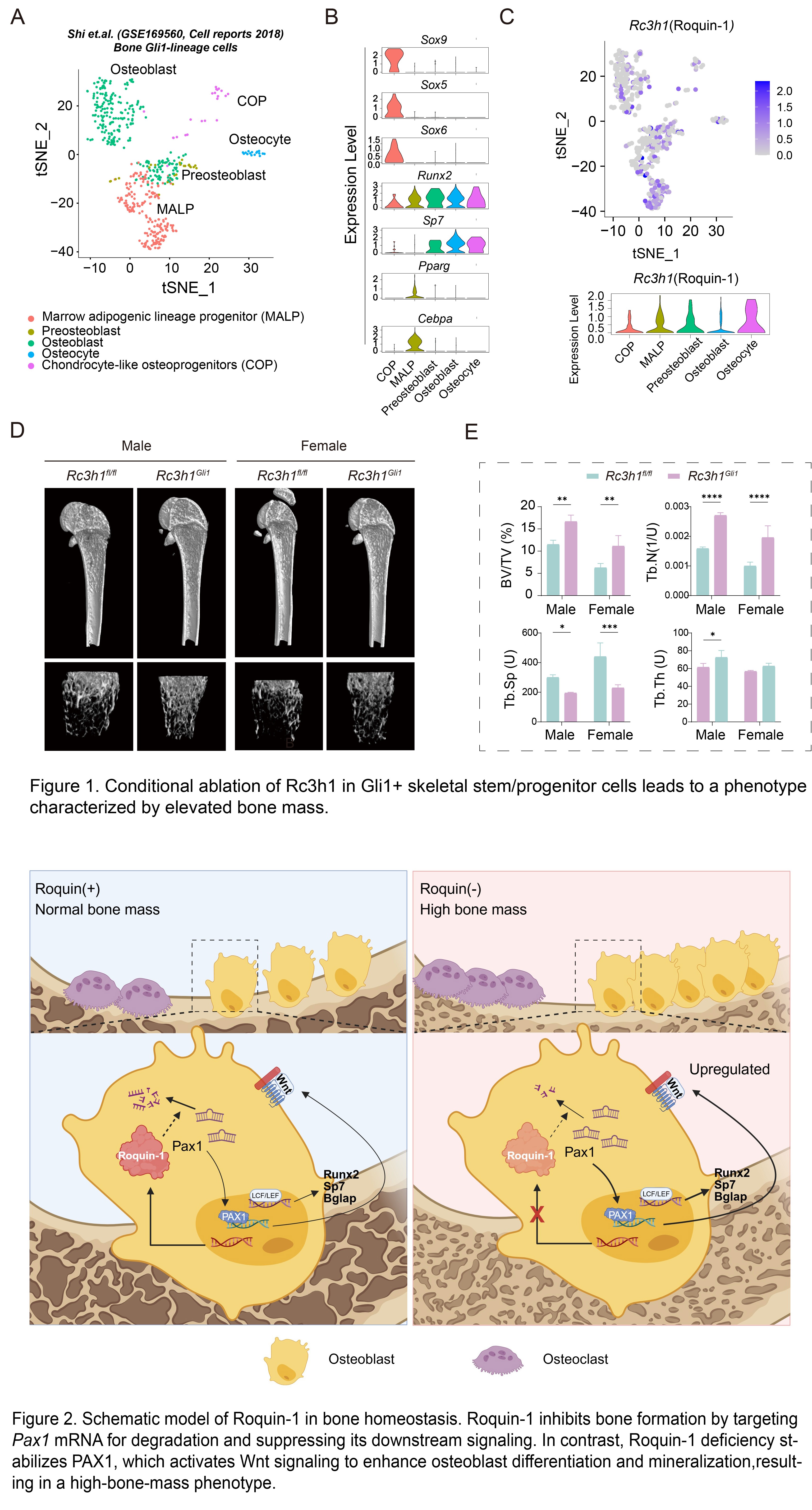
Methods: Roquin-1 expression was examined in postmenopausal osteoporosis patients and ovariectomized (OVX) mice. To dissect its skeletal function, we generated Gli1+ skeletal stem/progenitor cell-specific conditional knockout mice (Rc3h1Gli1). Bone mass was assessed by micro-CT and dynamic histomorphometry, and transcriptomic changes in knockout-derived BMSCs were analyzed by RNA-seq, with key candidates validated by qPCR and western blot.
Results: Roquin-1 was markedly elevated in osteoporotic bone. Its conditional deletion in Gli1+ skeletal stem/progenitor cells produced a marked high-bone-mass phenotype, characterized by robustly increased trabecular bone, enhanced bone formation rate, and intact cortical bone. Mechanistically, Roquin-1 loss robustly upregulated PAX1 and activated Wnt signaling. Pax1 knockdown reversed the pro-osteogenic effects in knockout-derived BMSCs, identifying PAX1 as a mediator of Wnt-driven osteogenesis.
Conclusion: Our findings identify Roquin-1 as a previously unrecognized negative regulator of bone formation, suggesting that its targeting may represent a potential anabolic approach for osteoporosis.
Key words: Roquin-1; BMSC; PAX1; Osteoporosis