 ANZBMS 2026
 Sex‑specific determinants of femoral neck bone mineral density over 16 years: findings from the Geelong Osteoporosis Study (#237)
Background: Age‑related decline in bone mineral density (BMD) is a major determinant of osteoporosis and fracture risk. This study aimed to identify sex‑specific determinants of long‑term femoral neck BMD in ageing men and women.
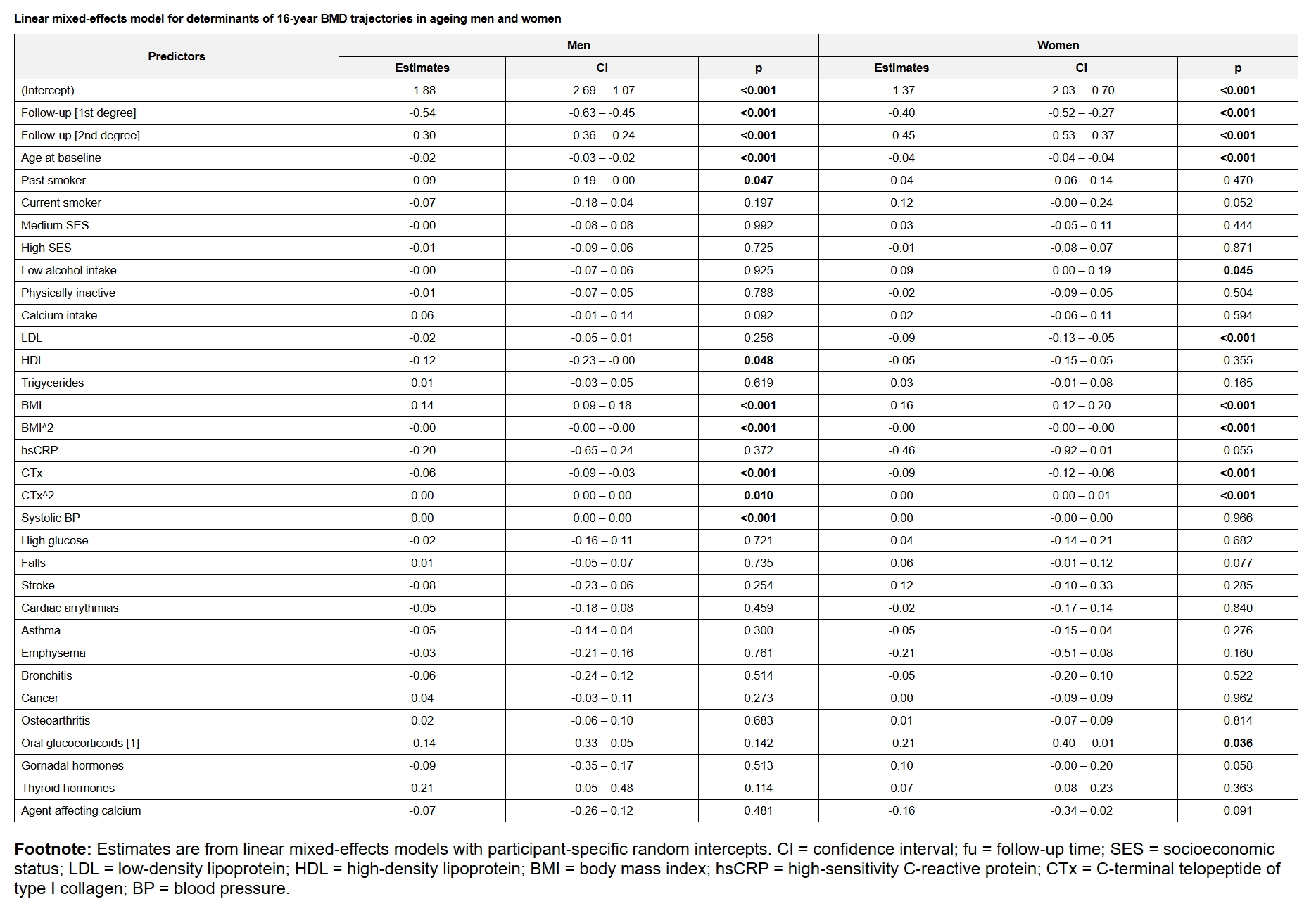
Methods: A total of 3,033 adults (1,494women, 1,539men) with a median (IQR) age of 55.3yr (38.4, 72.5) underwent DXA assessment of the femoral neck at baseline and two follow‑ups (women:10yr and 15yr; men:5yr and 15yr). Linear mixed‑effects models with random intercepts were used to estimate BMD across follow‑up. Time was modelled using restricted cubic splines to capture the overall longitudinal pattern. Potential determinants were included as time‑varying covariates, and associations with BMD over time were examined in sex‑stratified models.
Results: Femoral neck BMD declined progressively in both sexes. The spline‑modelled time trajectory showed clear evidence of non‑linearity, with increasingly steep declines over follow‑up. Age showed a stronger inverse association in women than in men. Higher BMI was associated with higher BMD in both sexes. Lipid associations differed by sex: higher LDL was associated with lower BMD in women, whereas higher HDL was associated with lower BMD in men. Low alcohol intake was positively associated with BMD in women but not in men. Higher C‑terminal telopeptide of type I collagen was inversely associated with BMD in both sexes. Oral glucocorticoid use was associated with lower BMD in women but not in men.
Conclusion: Findings indicate that metabolic, behavioural and medication-related factors influenced bone health differently in men and women, providing evidence for sex‑specific determinants of BMD.