 ANZBMS 2026
 When survival outpaces evidence: bone health management in adults with Duchenne muscular dystrophy (#214)
Background:
Duchenne muscular dystrophy (DMD) is an X-linked disease affecting 1 in 3600-6000 live male births (1). Progressive muscle degeneration leads to worsening muscle weakness, respiratory failure and cardiomyopathy. Historically, patients lost ambulation before puberty with a mean life expectancy of 19 years (2). Advances in care, particularly long-term high-dose glucocorticoid therapy delivered within multidisciplinary care models, have significantly improved survival resulting in a growing adult population with DMD. Increased longevity is associated with substantial treatment-related morbidity including severe glucocorticoid-induced low bone density, high fracture risk (up to 30% developing symptomatic vertebral fractures), delayed growth and puberty, hypogonadism, obesity and secondary adrenal insufficiency (1). Vertebral and long-bone fractures are associated with functional decline, reduced quality of life and increased mortality (3). Despite the predictability and clinical impact of bone disease in DMD, evidence guiding long-term bone health management remains limited (3).
Case Presentation:
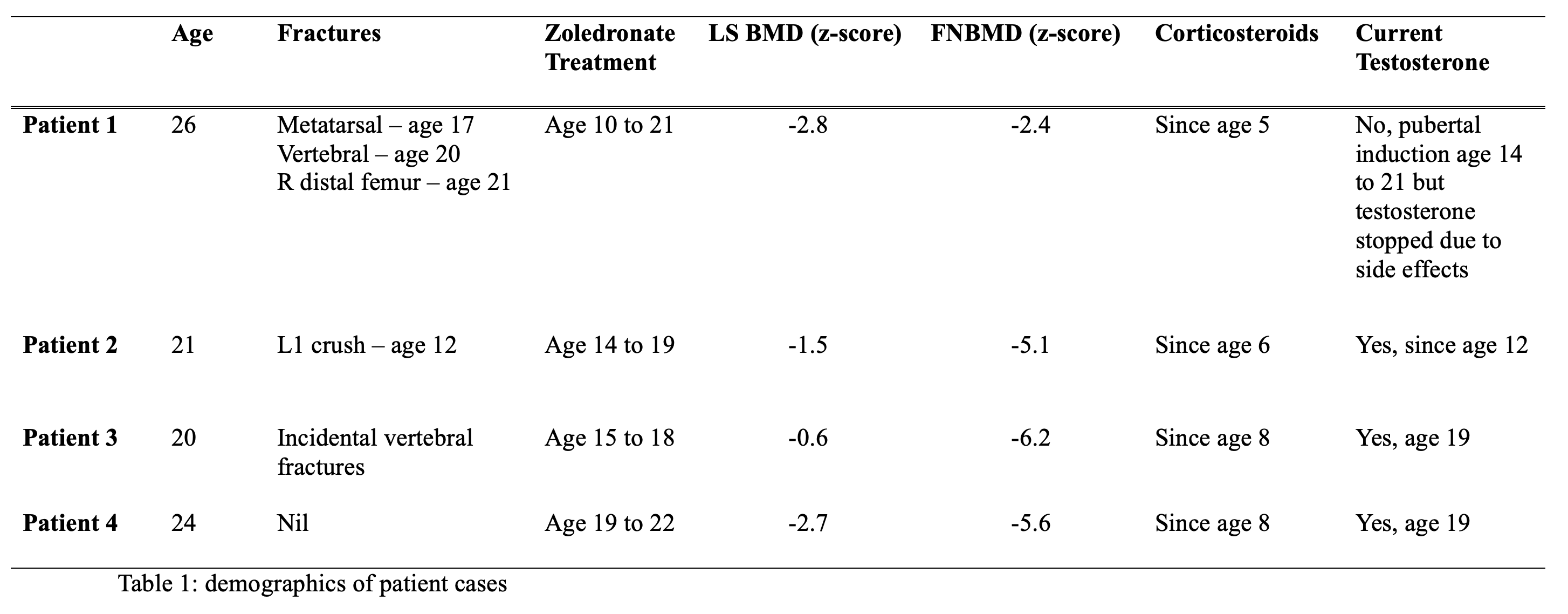
We present four adults with DMD who transitioned from paediatric services to an adult metabolic bone diseases clinic, highlighting the complexity of long-term skeletal management (Table1).
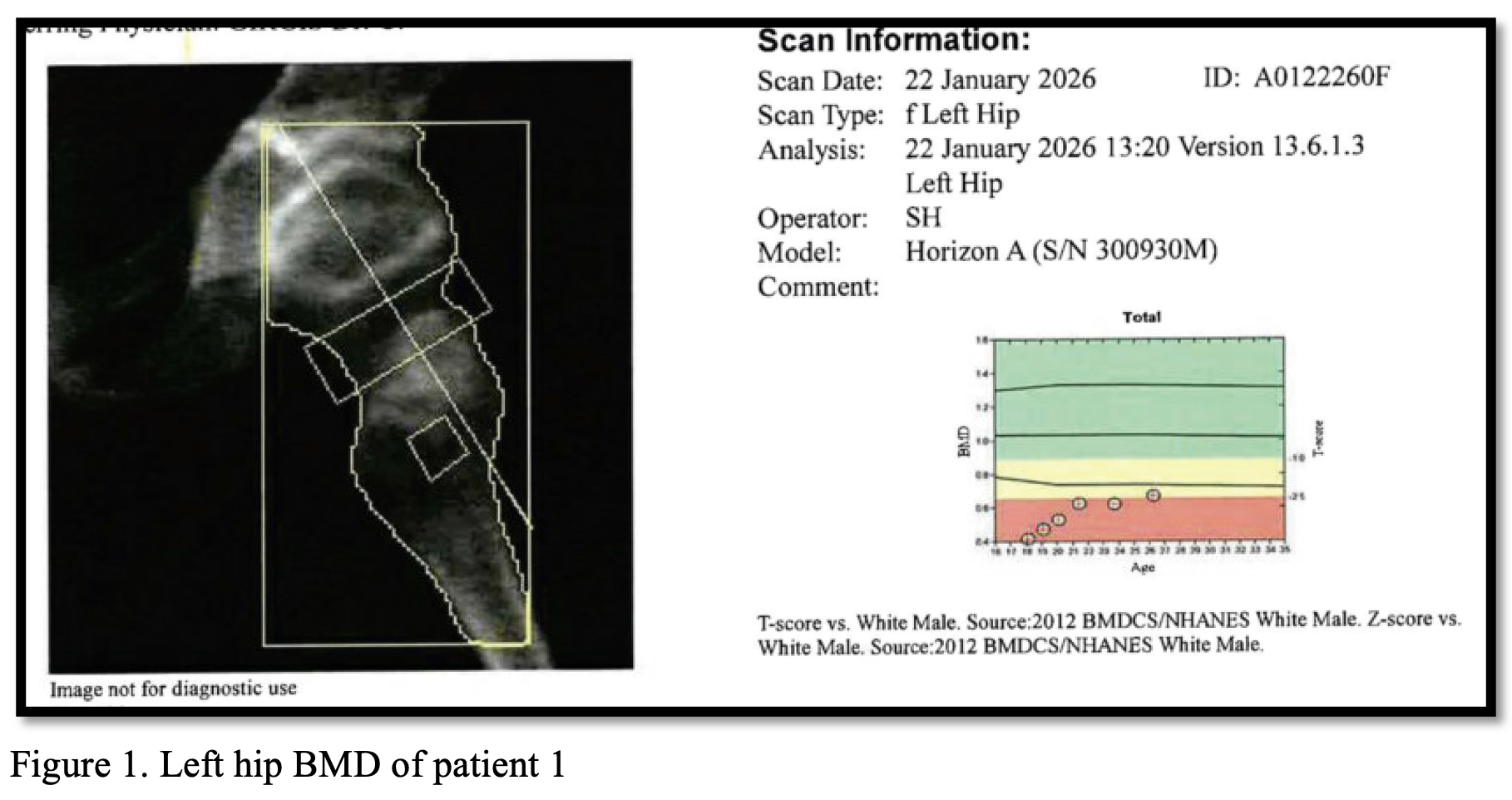
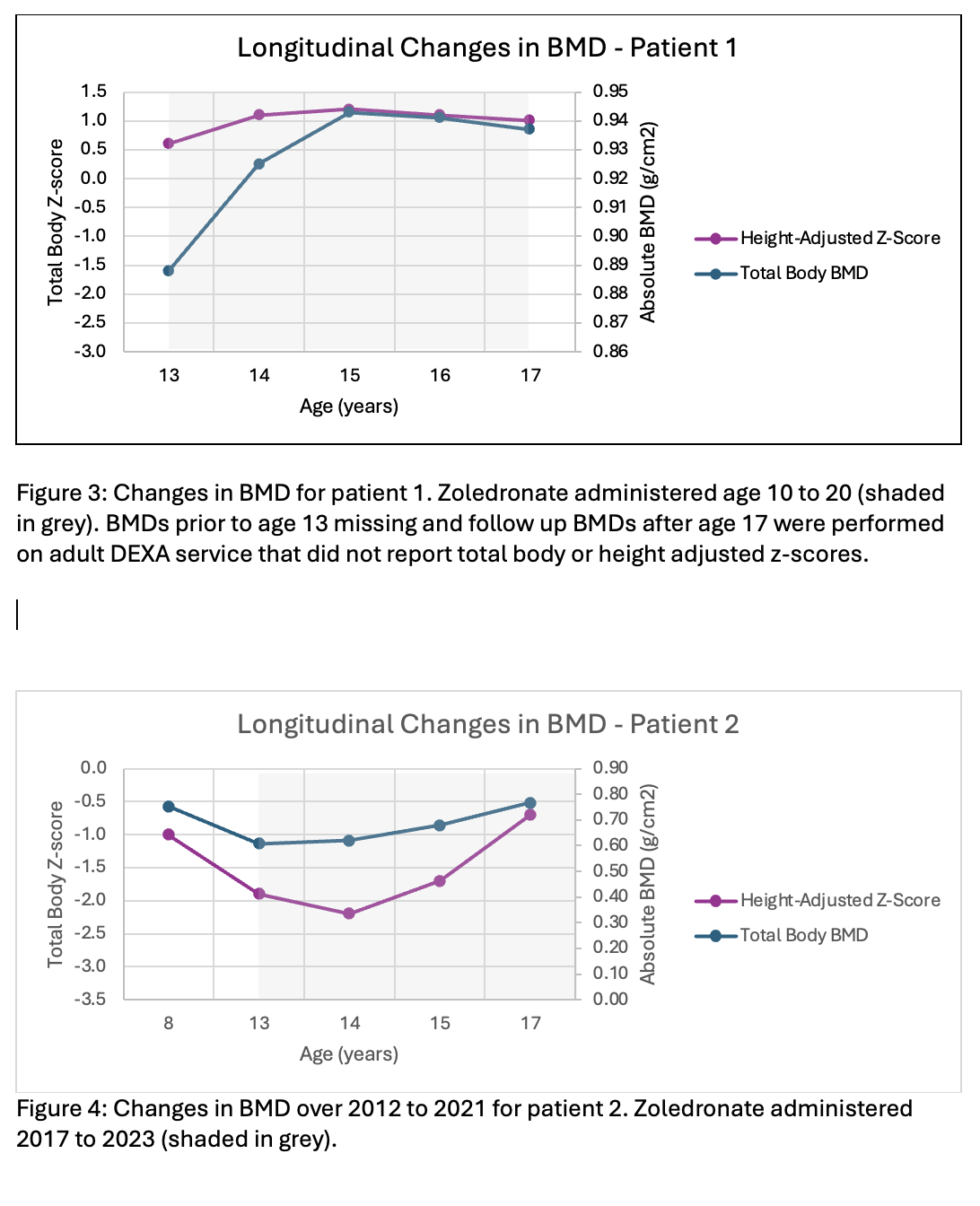
Patient 1 is a 26-year-old man, diagnosed with DMD at age 5. After more than a decade of zoledronic acid, his BMD has remained relatively stable over the past 3 years (Fig.1&3). He has had no recent fractures or falls, and bone turnover markers remain suppressed. This case raises the question of fracture risk in adults with DMD and whether ongoing antiresorptive therapy is necessary.
Patient 2 is a 21-year-old man diagnosed with DMD at age 6. His most recent BMD in 2023 demonstrated >10% improvement across all measured sites (Fig.4). He has remained clinically stable without fractures. Given this stability, the appropriateness of continuing a treatment break from zoledronic acid is uncertain.
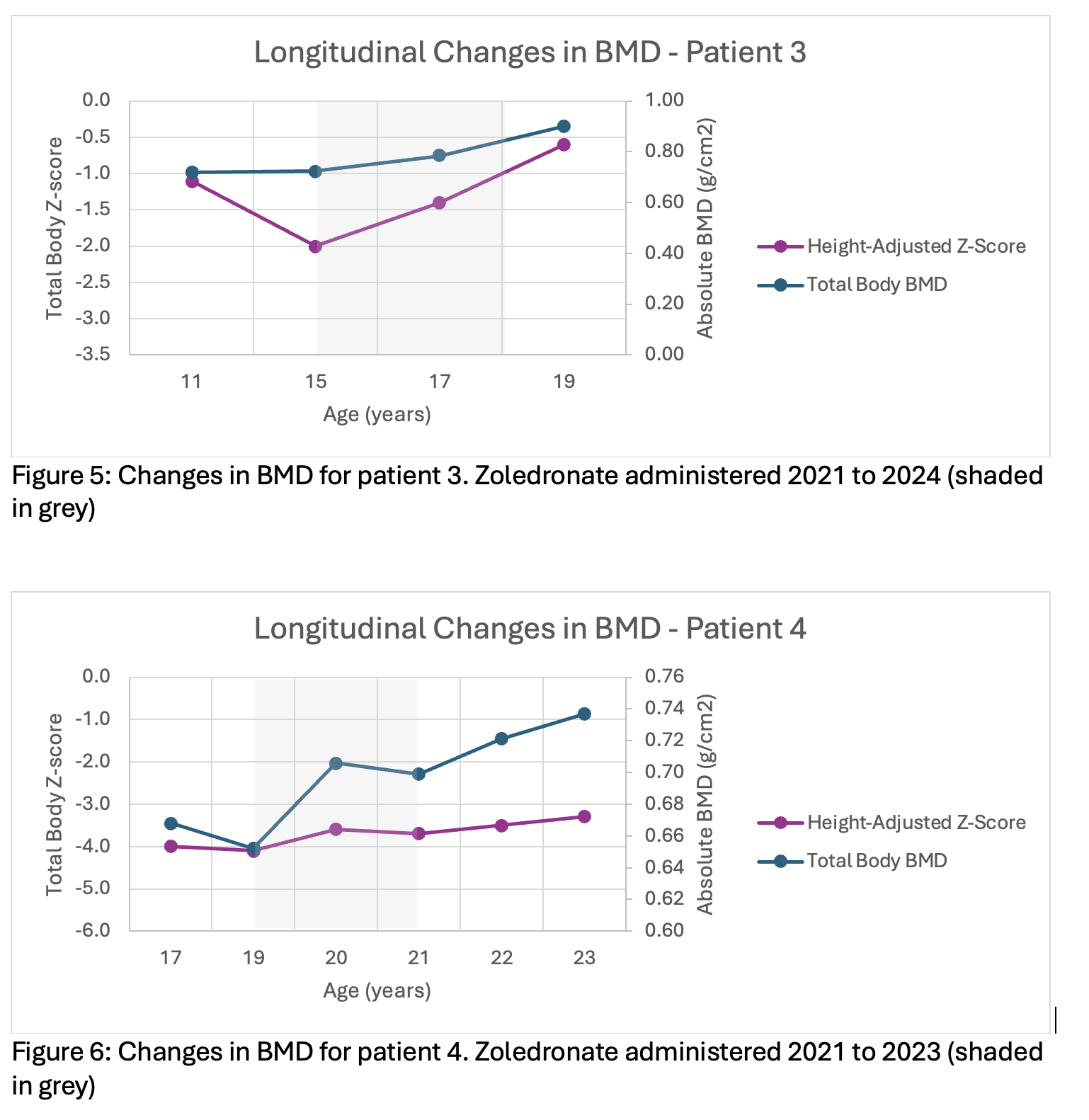
Patient 3 is a 20-year-old man diagnosed with DMD at age 3 (Fig.5). He has incomplete pubertal development and commenced testosterone replacement in September 2025. Two years have elapsed since his last bisphosphonate dose, prompting uncertainty as to whether antiresorptive therapy should be recommenced or additional time allowed for testosterone-mediated bone accrual.
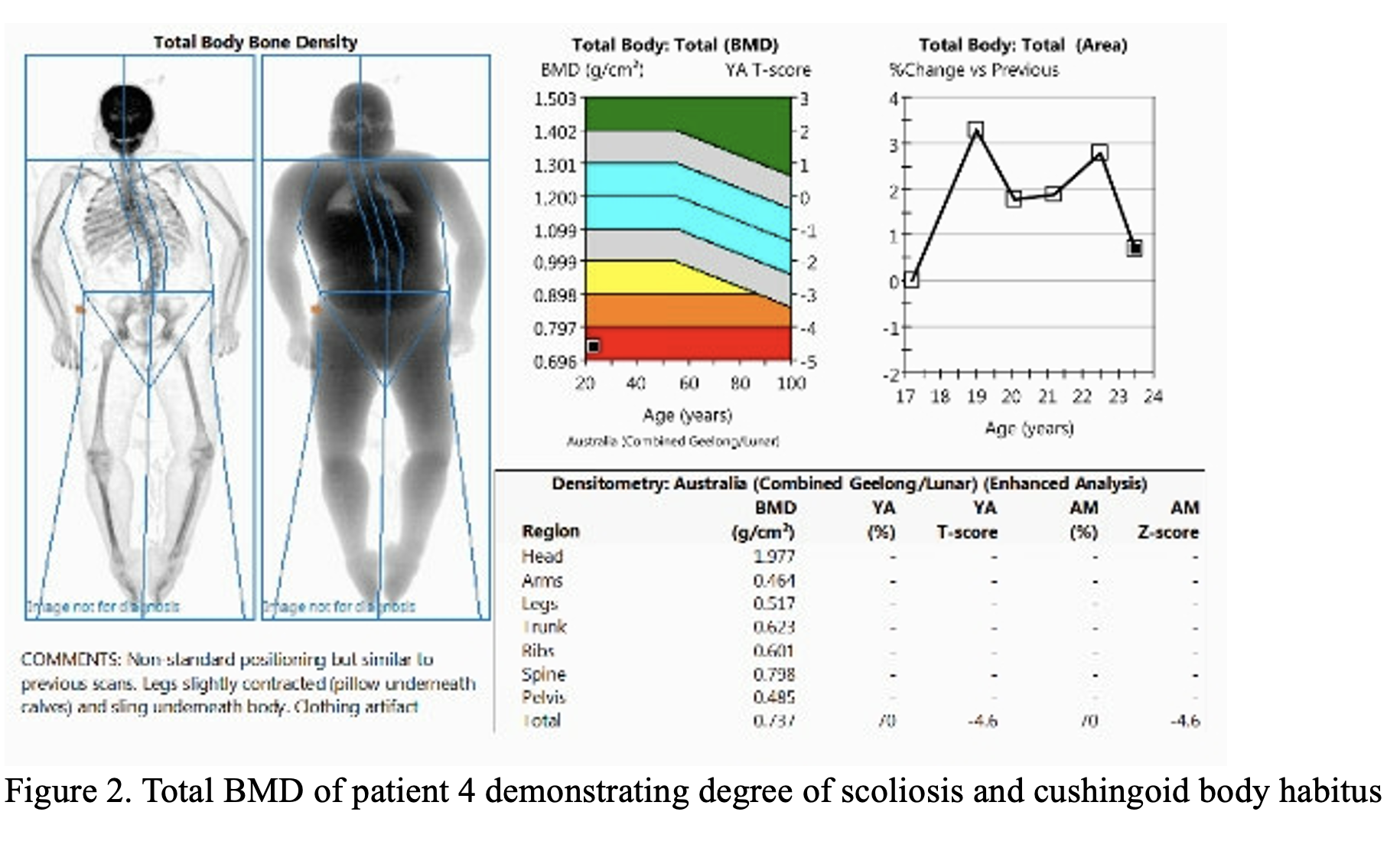
Patient 4 is a 24-year-old man diagnosed with DMD at age 8 with no fracture history (Fig.2&6). Annual zoledronic acid was initiated at age 19 for low BMD alongside testosterone replacement for delayed puberty. This case highlights the role of bisphosphonates in primary fracture prevention and current guideline recommendations.
Case Discussion
Glucocorticoids including deflazacort and prednisone are the mainstay of treatment in DMD, slowing functional decline, prolonging ambulation and improving survival (2,4). Even after loss of ambulation, glucocorticoids reduce scoliosis progression, and delay respiratory and cardiac dysfunction (2). Thus, glucocorticoids are now commonly continued lifelong, significantly altering disease course.
However, individuals with DMD are intrinsically vulnerable to bone fragility, even without glucocorticoid exposure. A retrospective study found 44% of untreated patients sustained at least one fracture and notably, 1 in 8 never regained ambulation following fracture (5). Glucocorticoid therapy further amplifies this risk. Houde et al., reported a higher fracture incidence in deflazacort-treated patients compared with untreated peers (43% vs 26%) with vertebral fractures occurring exclusively in the treatment group (20%)(6).
Despite the high prevalence of bone fragility, evidence to support primary fracture prevention in DMD is limited (7). The 2018 International Clinical Care Considerations recommended bisphosphonate treatment only for secondary prevention (8). Both oral and intravenous (IV) bisphosphonates improve or stabilise lumbar spine and total body BMD, but studies are underpowered to demonstrate fracture risk reduction (7,9). Evidence extrapolated from paediatric osteogenesis imperfecta suggests IV bisphosphonates may better preserve vertebral height and accordingly they are standard care in paediatric DMD until epiphyseal closure (3). Testosterone treatment improves bone accrual and may slow vertebral fracture progression (10).
The growing adult DMD population reveal a significant evidence gap with bone health management largely extrapolated from paediatric cohorts and glucocorticoid-induced osteoporosis (3,11). Although fracture rates in adult patients are over 9-fold higher than the national average, only a minority receive comprehensive bone health assessment (12). Evidence supporting alternative agents such as denosumab and teriparatide is limited to case reports and their role in DMD remain undefined (13). While expert consensus initiatives in the United Kingdom aim to address this gap, definitive recommendations are pending.
Conclusion
These four cases highlight the heterogeneity and complexity of bone disease trajectories in adults with DMD and the evidence gap guiding treatment. Key challenges surrounding fracture risk assessment, bisphosphonate use, and treatment goals warrant further discussion in the oral presentation. In the absence of robust adult-specific evidence, bone health management must rely on individualised, shared decision-making.