 ANZBMS 2026
 Patterns of osteoporosis treatment initiation following low-trauma fracture: an Australian population-based cohort study (#5)
Background/Aim: Understanding patterns of treatment initiation after fracture is important for identifying care gaps and improving secondary fracture prevention. However, population-level data on prescribing patterns and treatment timing after fracture remain limited. We aimed to characterise osteoporosis medicine prescribing patterns following low-trauma fracture and identify predictors of early treatment initiation.
Methods: We conducted a population-based prospective cohort study using linked administrative health data from emergency department, hospital admission, and medicine dispensing records in New South Wales (NSW), Australia. Adults aged 50 years and older with an incident low-trauma fracture between 1 January 2011 and 30 June 2019 were included. Primary outcomes were osteoporosis prescribing patterns and time to treatment initiation after incident fracture, classified over a 3-year window as early (within 12 months), late (1–3 years), or none. Secondary outcomes were predictors associated with early treatment initiation.
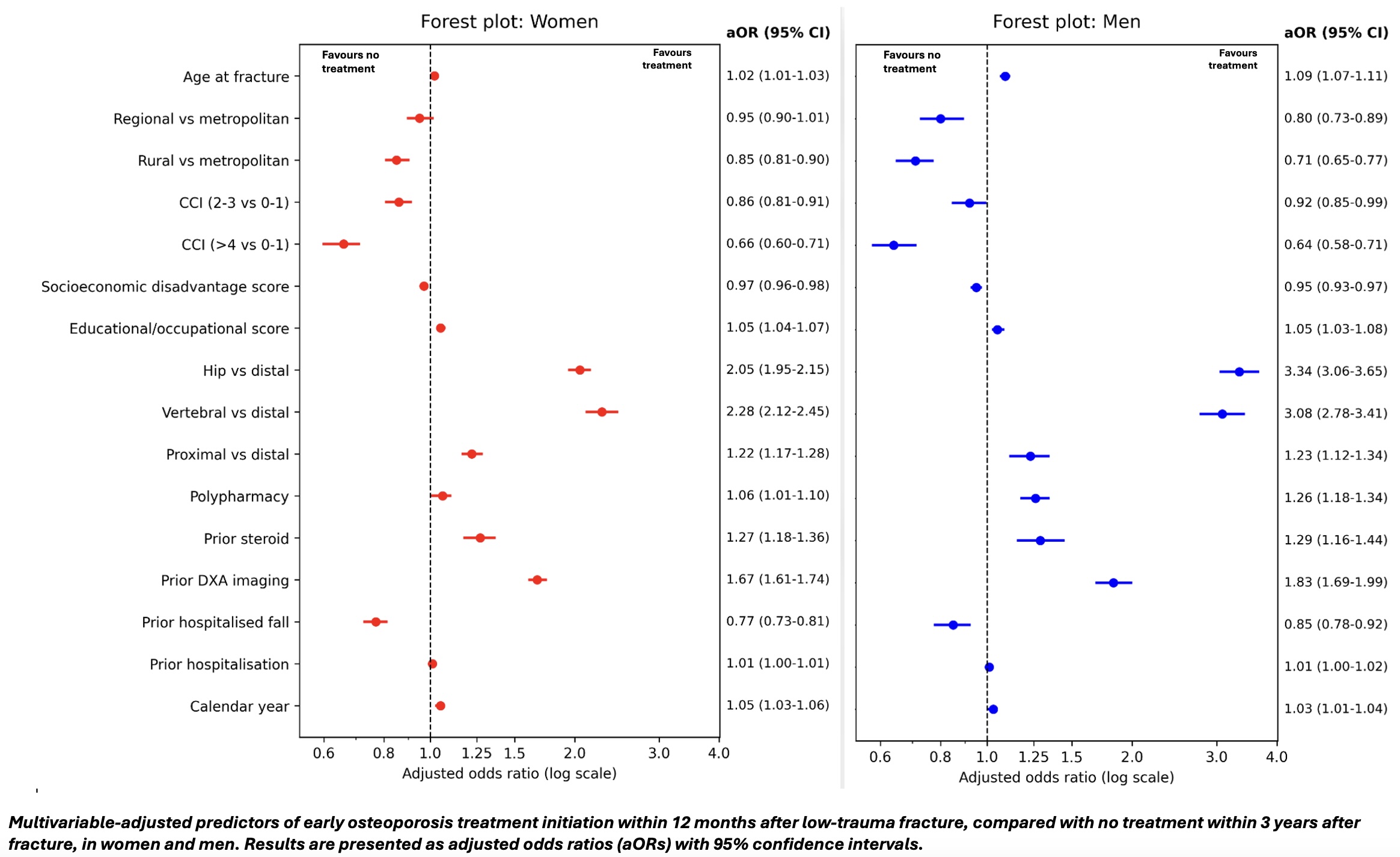
Results: Among 132,268 individuals with incident fractures, 64% were women. Overall, 29,802 (22.5%) initiated osteoporosis medicine, while 102,466 (77.5%) remained untreated. Among women (mean age 77.7 years, SD 10.1), 20.1% initiated treatment within 12 months, 7.0% initiated within 1–3 years, and 72.9% remained untreated. Among men (mean age 77.2 years, SD 10.0), the corresponding proportions were 10.8%, 3.7%, and 85.6%. Greater comorbidity burden was associated with lower odds of early treatment initiation (women: adjusted odds ratio [aOR] 0.66, 95% CI 0.60 to 0.71; men: aOR 0.64, 95% CI 0.58 to 0.71 for Charlson Comorbidity Index ≥4 vs 0–1). Hip fracture was strongly associated with early treatment initiation compared with distal fracture (women: aOR 2.05, 95% CI 1.95 to 2.15; men: aOR 3.34, 95% CI 3.06 to 3.65). Nearly one in four late initiators sustained a refracture before starting treatment. Over time, denosumab rapidly replaced oral bisphosphonates as the dominant therapy.
Conclusions: More than three-quarters of individuals remained untreated after fracture, highlighting substantial and persistent gaps in secondary fracture prevention. Treatment initiation was strongly influenced by fracture site and multimorbidity, and rates were lower in men. Increasing reliance on denosumab underscores the need for careful long-term treatment planning and strategies.