 ANZBMS 2026
 ACC1-mediated mitochondrial fatty acid synthesis (mtFAS) governs osteoclast activation and bone loss (#43)
Background. Osteoclast formation and bone resorption require extensive membrane remodelling and high metabolic activity. De novo lipogenesis (DNL) is a key biosynthetic pathway that converts excess non-lipid substrates, such as glucose, into lipids, and has been widely implicated in metabolic and malignant diseases. However, whether DNL regulates osteoclast differentiation and function and whether it contributes to osteoclast-driven bone loss remain unknown.
Objective. This study aims to define the role of acetyl-CoA carboxylase 1 (ACC1), the rate-limiting enzyme in DNL, in osteoclast differentiation and function, and to evaluate its therapeutic potential in pathological bone loss.
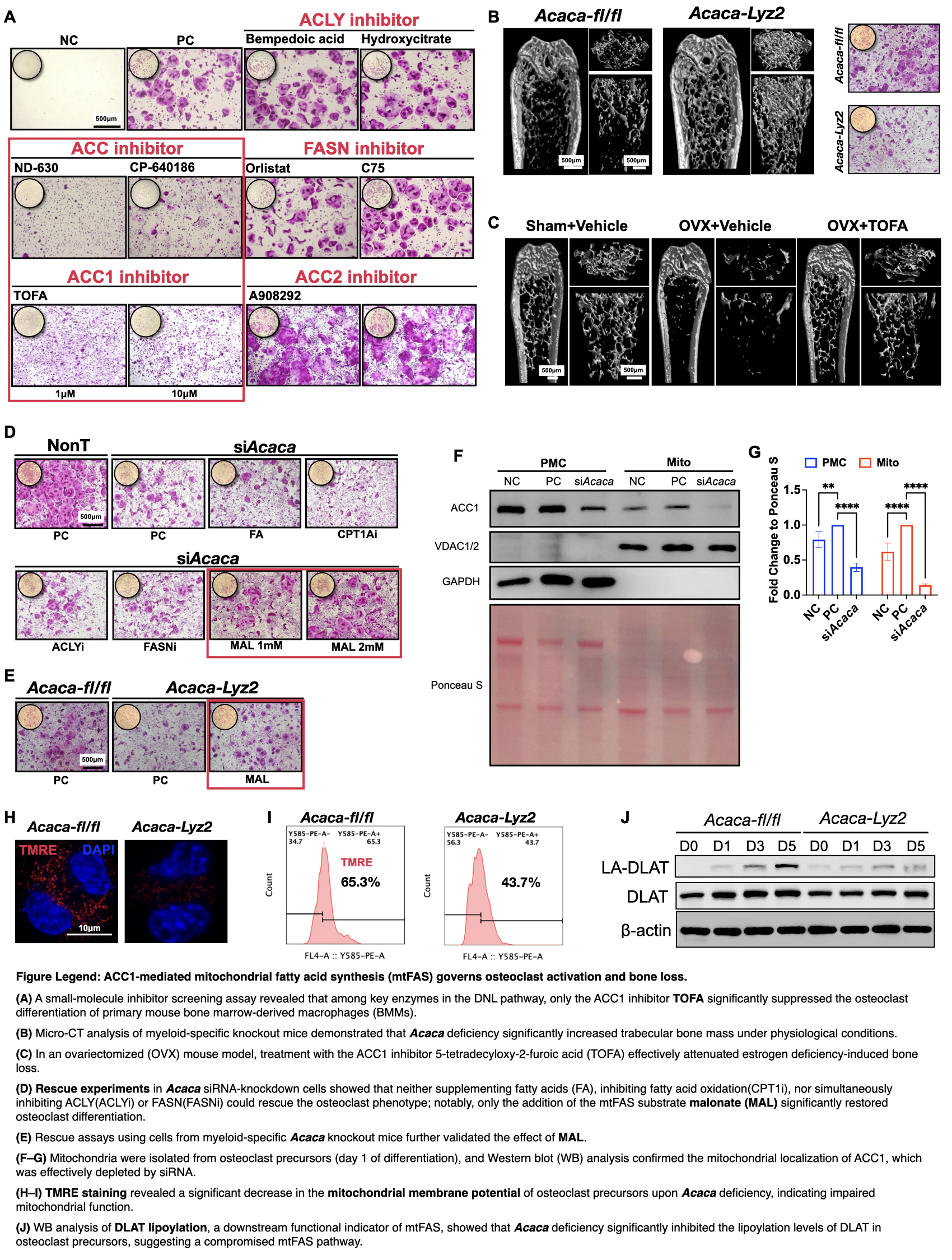
Methods and Results. Pharmacological screening of DNL inhibitors identified ACC1 inhibition as uniquely effective in suppressing osteoclast differentiation and bone resorption in vitro, without impairing osteoblast differentiation. Consistent with this, ACC1 inhibitor treatment attenuated ovariectomy-induced bone loss in vivo by reducing osteoclast activity. Myeloid-specific Acaca knockout mice (Lyz2-Cre; Acacafl/fl) similarly showed reduced osteoclast activity and increased bone mass. Mechanistically, the osteoclast defect caused by ACC1 loss could not be rescued by canonical fatty acids (e.g., oleic acids, palmitic acids), but was fully restored by malonate, a substrate for mtFAS. This was aligned with the immunofluorescence analysis which showed mitochondrial enrichment of ACC1. Finally, we showed that ACC1 loss impaired mtFAS, as evidenced by reduced mitochondrial protein lipoylation, defective electron transport chain assembly, and suppressed mitochondrial translation. Importantly, these mtFAS failures were reversed by malonate treatment.
Conclusions. Together, these findings demonstrated that ACC1 is essential for mediating mtFAS during osteoclast formation and function. Targeting ACC1–mtFAS–mitochondrial homeostasis axis represents a novel therapeutic strategy for osteoclast-related bone loss.