 ANZBMS 2026
 Fracture Site, Aging, and Multimorbidity Shape Post-Fracture Consequences: A Whole-of-Population Study (#101)
Whole-of-population evidence on post-fracture consequences that accounts for multimorbidity remains limited. We quantified how the interaction between ageing, multimorbidity, and fracture site contributed to post-fracture consequences.
This statewide retrospective cohort study included 84,165 men and 196,521 women in New South Wales, Australia, born on or before 1/1/1955, who sustained an incident fracture between 2005 and 2017 and were followed to 2022. Fractures and comorbidities were identified using ICD-10 codes within five years pre-fracture. We focused on imminent adverse outcomes within two years, including non-fracture (NF) readmission (≥24-hour admissions occurring ≥7 days post-fracture), subsequent fracture (SF), and all-cause mortality.
Post-fracture consequences were substantial. Within 2 years 50%, 8%, and 27% of men and 42%, 11%, and 18% of women experienced NF readmission, SF, and death, respectively. We identified six specific multimorbidity clusters in men and five in women. The highest risks of NF readmission and mortality were observed among individuals with hip or pelvis fractures, those aged ≥80 years, or those classified in the cardiometabolic multimorbidity cluster, characterised by complicated diabetes and severe cardiovascular disease. Approximately one-third of men and one-quarter of women died within one year after hip fracture, increasing to 47% and 33%, respectively, at two years. Notably, one-quarter of men with humerus or rib fractures, often considered lower-risk injuries, died at 2 years. In contrast, distal fractures (e.g., forearm, hand or foot) had significantly lower mortality (<10% at 2 years). NF readmissions were frequent across all fracture sites, particularly for proximal fractures, with leading causes including cardiovascular disease, malignancy, pneumonia, and treatment-related complications. While SF events were less frequent, they remained clinically significant and were relatively more common following distal fractures.
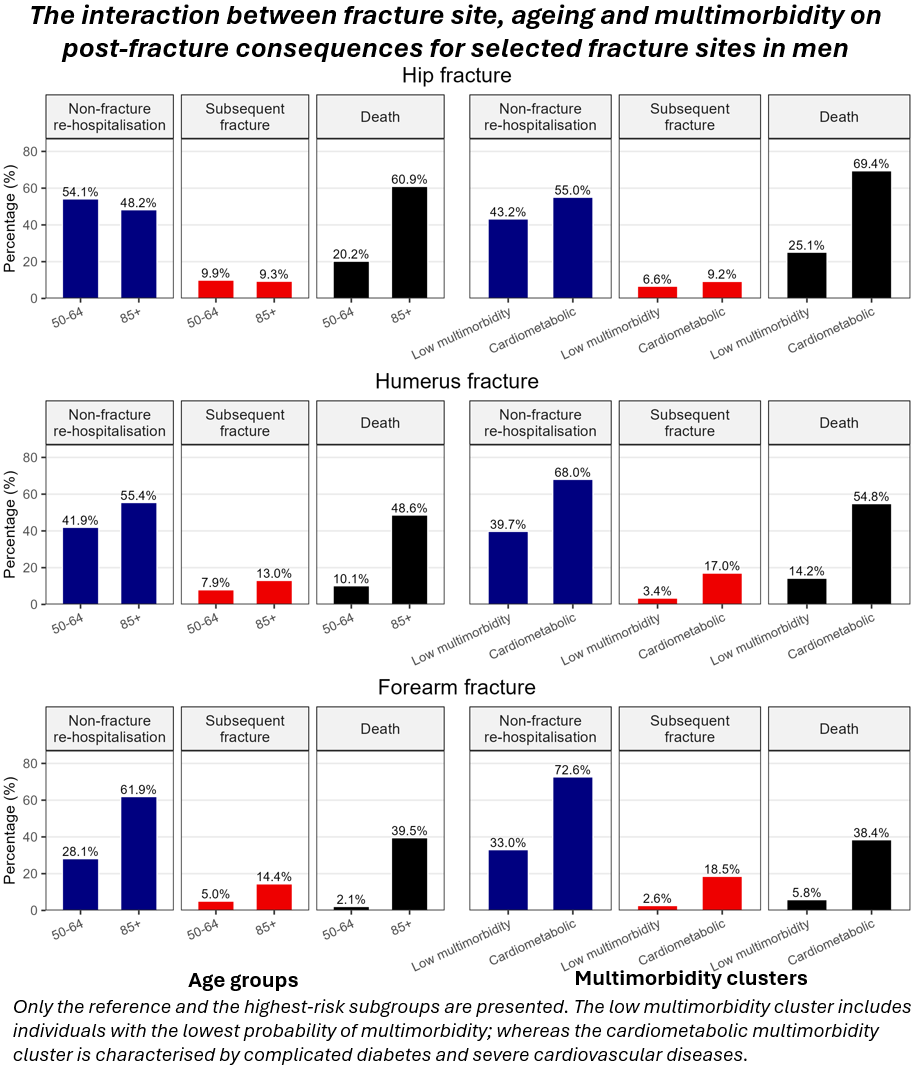
Advanced age, multimorbidity, and proximal fracture site were associated with substantial post-fracture consequences (Figure). Among hip fracture patients, 55% and up to 70% of those in the cardiometabolic cluster were readmitted or died within 2 years, respectively, significantly exceeding rates observed in those without multimorbidity.
These findings show substantial post-fracture consequences, with particularly high early mortality and readmission following proximal fractures among multimorbid elderly patients. Early, risk-stratified, and multidisciplinary care is essential for this high-risk population.